Why people quit calorie tracking usually comes down to three things: it takes too much effort, it demands perfection, and one missed day feels like total failure. The fix is not more willpower. It is lowering the friction of logging and replacing all-or-nothing rules with habits you can repeat on a bad day, not just a good one.
The real reasons calorie tracking fails
Most people do not quit because tracking does not work. They quit because the version of tracking they tried was too heavy to sustain. Three patterns show up again and again.
1. Friction: logging takes too long
Searching a database, weighing portions, and entering each ingredient adds up to several minutes per meal. Multiply that by three or four meals plus snacks, and tracking starts to feel like a part-time job.
The more steps a habit requires, the lower the odds you repeat it. Behavior researchers like BJ Fogg (Stanford) have argued that making a behavior easier to do is often more effective than trying to boost motivation. When logging is slow, you skip the “annoying” meals first, then skip more, then stop.
2. Perfectionism: the accuracy trap
Many people believe a log only counts if it is exact. So they agonize over whether the chicken was 140 grams or 160, or whether the dressing was one tablespoon or two. That pressure makes every entry stressful.
Here is the reframe: calorie tracking is a measurement with built-in error, and that is fine. Even careful manual logging carries uncertainty, and food labels themselves are allowed a margin of error. A “good enough” estimate you actually record beats a perfect number you never enter because you gave up.
3. All-or-nothing thinking
You miss breakfast in your log, decide the day is “ruined,” and stop tracking entirely. One gap becomes a skipped day, a skipped week, and an abandoned habit.
This is the single most common reason people quit. The data point you lose is small. The mindset that says “if I cannot do it perfectly, I will not do it at all” is what actually does the damage.
Why consistency beats accuracy
Tracking only helps if you keep doing it. App-based self-monitoring of diet has been linked with weight-management outcomes in research summaries, and a recurring theme is that frequency and consistency of logging matter more than the precision of any single entry.
The reason is simple. Tracking works mainly through awareness. When you log, you notice the second helping, the handful of nuts, the latte you forgot about. That awareness nudges hundreds of small decisions over weeks. A flawless log for three days does nothing; a “roughly right” log for three months changes behavior.
So the goal is not a perfect spreadsheet. The goal is a habit loose enough to survive busy days, travel, restaurants, and the occasional total miss.
Habit strategies that make tracking stick
These are practical, evidence-aligned tactics for turning logging into something automatic instead of something you dread.
Cut the friction first
Friction is the highest-leverage fix. If logging a meal takes 15 seconds instead of 3 minutes, you will do it far more often.
- Use the fastest input method available. Photo logging, voice entry, or saved “favorite” meals beat manual database searches.
- Pre-build your repeats. Most people eat the same 10 to 15 meals. Save them once, then re-log in a tap.
- Log in the moment. Capture the meal before you eat, not from memory at midnight when details are fuzzy.
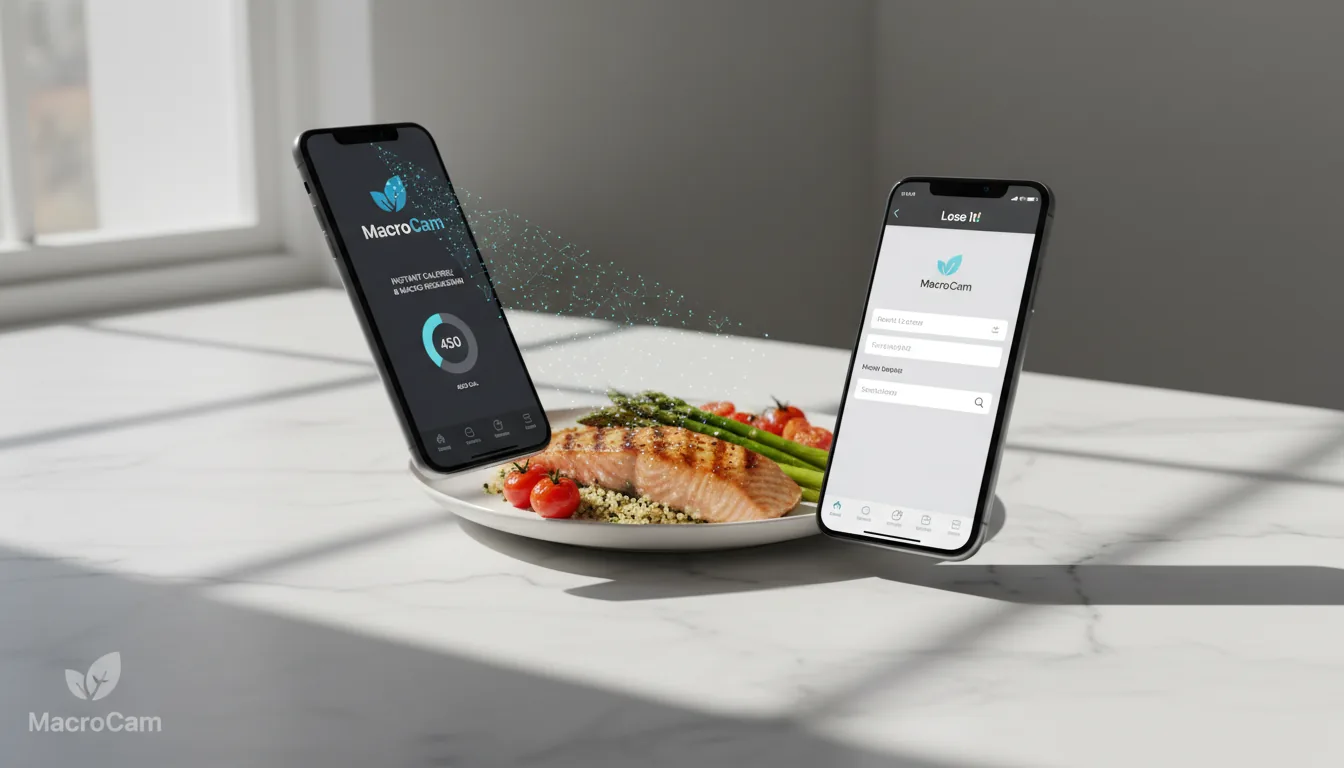
Low-friction photo logging is one of the cleanest ways to beat the friction problem. You point your phone at the plate and let the app turn the image into calories and macros, instead of typing every ingredient. We cover how this works in our guide to evidence-based AI calorie tracking.
Set a “minimum viable log”
Define the smallest version of tracking you will always do, even on your worst day. For example: “I will log at least one photo of one meal.” That floor keeps the streak alive when life gets hectic.
A tiny log on a chaotic day protects the habit far better than an ambitious plan you abandon. You can always do more; the rule is just to never do nothing.
Attach logging to an existing cue
Habits stick when they ride on routines you already have. This is “habit stacking”: you pin a new behavior to an established one.
- After I sit down to eat, I take a photo of my plate.
- After I order at a restaurant, I log my best guess.
- After my morning coffee, I log breakfast.
The existing action becomes the reminder, so you rely less on memory and motivation.
Aim for “good enough,” then move on
Give yourself permission to estimate. If you are not sure of a portion, pick the closest option and keep going. The 10 seconds you save by not agonizing is what keeps you logging tomorrow.
Modern AI estimators are designed for exactly this trade-off: a fast, reasonable estimate instead of a slow, “perfect” one. If you want to understand how close these estimates actually get and where they struggle, read our evidence-based AI calorie tracking guide.
Plan for the miss in advance
Decide now what you will do when you skip. The rule: never miss twice. Missing one meal or one day is normal. The habit only dies when one miss turns into two, then ten.
When you catch a gap, do not try to reconstruct it perfectly. Just log your next meal and continue. Restarting fast is the entire skill.
Track trends, not days
Zoom out. One high day does not matter; the weekly average does. When you judge yourself on the trend line instead of any single entry, a “bad day” stops feeling like a reason to quit and becomes one ordinary point on a long graph.
A simple 7-day reset to rebuild the habit
If you have quit before, restart small and stack early wins.
- Days 1 to 2: Log just one meal per day. The only goal is to open the app and capture something.
- Days 3 to 4: Log two meals per day, using photos or saved favorites to stay fast.
- Days 5 to 7: Log full days, but keep estimates loose. Do not weigh anything.
- Throughout: If you miss, log your very next meal. Never miss twice.
By the end of the week, the action feels routine rather than effortful, which is the point at which most people actually keep going.
Where low-friction tools fit in
The lower the effort per log, the longer you last. That is why photo-based logging exists.
MacroCam is an AI calorie tracker for iPhone that lets you snap a photo of a meal and get an estimate of calories, protein, carbs, and fat, so logging takes seconds instead of minutes. It has a 4.8-star rating from around 1,200 reviews, and the free tier includes up to three AI photo scans per day with no credit card required. With permission, selected Apple Health profile data can pre-fill onboarding and personalize targets. None of this makes the habit automatic for you, but removing friction is the part that tools genuinely can solve.
Frequently asked questions
Why do most people quit calorie tracking?
Most people quit because of friction (logging takes too long), perfectionism (believing every entry must be exact), and all-or-nothing thinking (treating one missed meal as a ruined day). The habit usually breaks not from lack of motivation but because the tracking method was too effortful or too rigid to sustain.
Does calorie tracking have to be perfectly accurate to work?
No. Tracking works mainly by building awareness of what you eat, and consistency matters more than precision. App-based food tracking has been linked with weight-management outcomes in research, and a “good enough” estimate you log every day is more useful than an exact number you stop recording. Aim for reasonable estimates, not perfection.
How do I stop giving up after missing a day?
Use the rule “never miss twice.” Missing one meal or one day is normal and harmless; the habit only dies when one gap becomes a streak of gaps. When you slip, do not try to reconstruct the missed entries. Just log your next meal and continue.
What is the easiest way to track calories consistently?
Cut the effort per entry. Use fast input methods like photo logging, voice entry, or saved favorite meals; log in the moment instead of from memory; and set a “minimum viable log” you will always do even on a busy day. Lower friction is the strongest predictor of sticking with it.
Can an app actually help me stick with tracking?
An app cannot supply discipline, but it can remove the friction that causes most quitting. Tools that turn a meal photo into calories and macros, such as MacroCam on iPhone, shrink logging from minutes to seconds, which makes the habit far easier to repeat day after day.